Moisture mapping and documentation
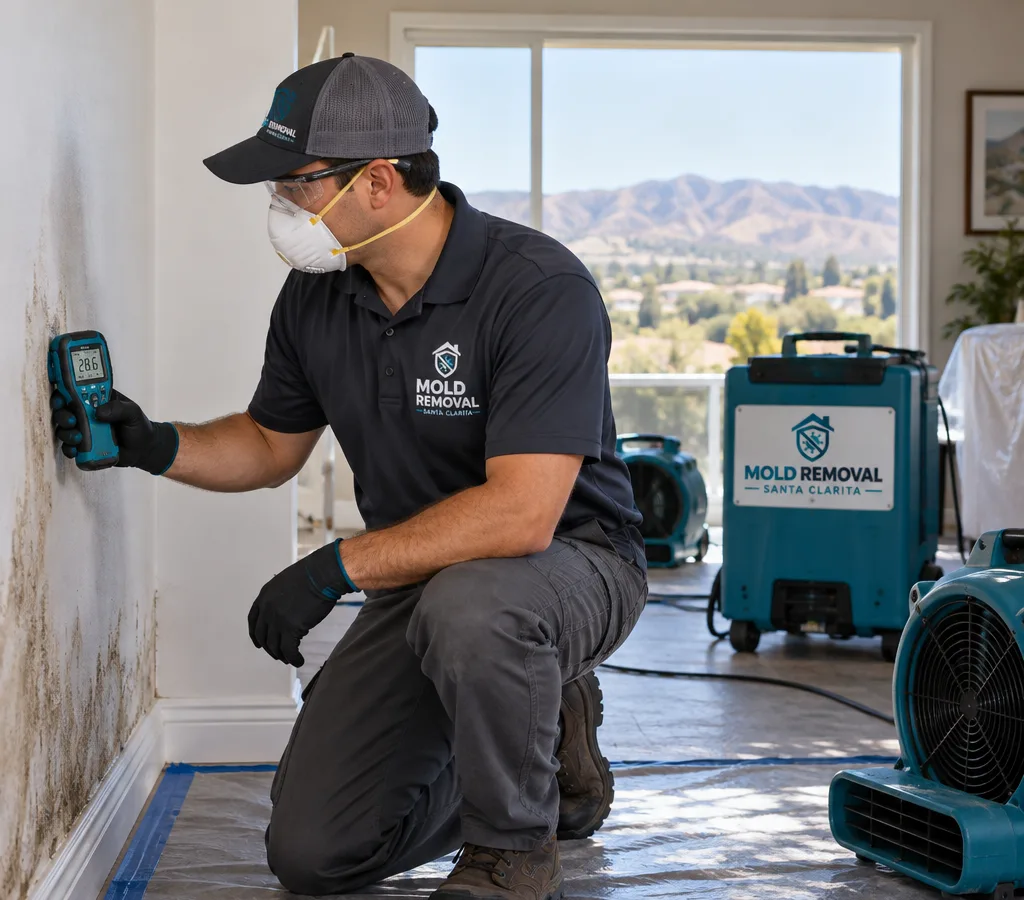
We check walls, floors, and surrounding rooms with moisture meters and thermal imaging where helpful, then record readings so drying decisions are based on data, not guesswork.
When water gets into floors, walls, or cabinets, time matters. Get a clear inspection, documented moisture readings, and a restoration plan that protects your home and finishes.
If you are dealing with a supply line leak, an overflowing fixture, a roof intrusion during a storm, or a backed-up drain, the first goal is the same: stop the source and control moisture before it spreads. Santa Clarita water damage restoration is about drying the structure properly, protecting materials that can be saved, and documenting what happened so you can make good decisions quickly.
Mold Removal Santa Clarita provides water damage restoration in Santa Clarita, CA with practical communication and jobsite discipline. You will get a scope you can understand, photos of affected areas, and moisture checks to confirm drying progress. The work is designed to reduce the chances of secondary damage like swelling baseboards, delaminated flooring, stained drywall, and lingering odors.
If your situation includes visible fungal growth or you are concerned about what may happen after the dry-out, our team also handles mold remediation when it is needed as part of the recovery plan.
We check walls, floors, and surrounding rooms with moisture meters and thermal imaging where helpful, then record readings so drying decisions are based on data, not guesswork.
Extraction removes bulk water fast. Then we set airflow and dehumidification to target materials like drywall, framing, subfloor, and cabinets without over-drying unaffected areas.
When materials cannot be dried safely, we remove only what is necessary to access wet cavities and prevent hidden moisture.
We clean affected surfaces and contents when salvageable. For Category 2 or Category 3 water situations, sanitation steps are stricter to address contamination risk.
After drying, we address odor sources and re-check moisture levels so you are not left with damp materials behind paint, flooring, or trim.
Start by stopping the water source if it is safe. Shut off a fixture valve or the main supply if needed. If water is near outlets or the electrical panel, avoid the area until power is confirmed safe.
Next, protect what you can without disturbing wet building materials too much. Move valuables and small furniture out of standing water. If you can do so safely, blot up water and place towels to limit spread.
Then bring in a restoration team. Drying the inside of wall cavities, under flooring, and inside cabinet toe-kicks is where problems hide. In many Santa Clarita homes, common leak paths include supply lines to sinks and refrigerators, water heater failures, and washing machine hoses. The sooner moisture is measured and contained, the less likely you are to face swelling, staining, or microbial growth.
If you plan to involve insurance, preserve evidence. Take photos of the source and impacted materials, and avoid throwing away failed parts until you have guidance.
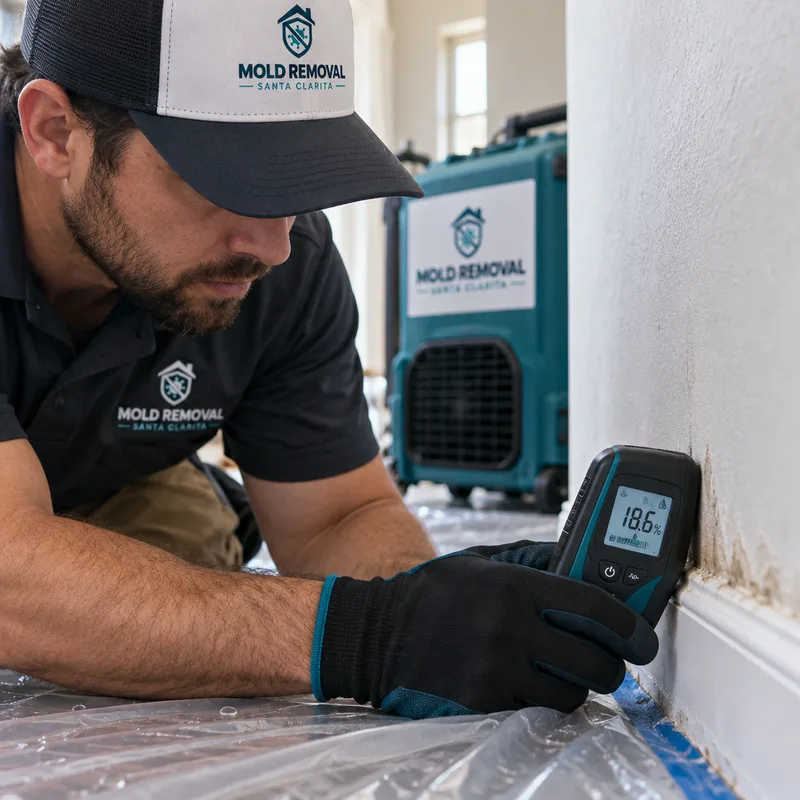
A measured process helps control moisture, protect unaffected areas, and verify materials are dry before repairs begin.
Book Your Free InspectionWe identify the water source type, affected materials, and any immediate hazards such as slipping, electrical exposure, or ceiling sagging. We document conditions and establish a drying plan based on readings.
We extract standing water, protect unaffected areas, and begin controlled drying. Air movers and dehumidifiers are placed for effective circulation and moisture removal.
If wet materials block access to hidden moisture, we remove limited sections so cavities can dry. When contamination is a concern, we add containment practices to limit cross-contamination.
Drying is not set-and-forget. We re-check moisture content and humidity, then adjust equipment placement or capacity to keep progress on track.
We clean affected surfaces and address odor sources. Final moisture readings confirm that materials are dry before you move forward with repairs and finish work.
Water damage restoration in Santa Clarita typically ranges from about $1,500 to $8,000+, depending on how far water traveled and what materials were affected. A small, contained leak with limited extraction and drying is often in the lower end, while multi-room drying with removal of drywall, insulation, or flooring moves costs higher.
Final pricing depends on category of water, the square footage and number of wet layers, access to wet cavities, equipment days, and whether contents handling is needed. The exact cost is confirmed after an on-site inspection and moisture mapping.
“A supply line under our kitchen sink failed and water ran into the adjacent room. They showed us exactly where the moisture was, explained what had to be opened up, and kept checking readings until everything was dry.”
“What I appreciated most was the documentation. Photos, notes, and clear communication about what was wet and what wasn't. It made the next steps with repairs much easier.”
Start restoration as soon as you can safely stop the water source because moisture can move into drywall, baseboards, and flooring within hours. Early extraction and drying reduces swelling, staining, and the chance of microbial growth developing inside wall cavities or under floors.
Some drywall can be dried when the wetting is clean water, limited, and caught early, but saturated insulation usually loses performance and can hold moisture. The decision comes from moisture readings, visual condition, and whether the water is clean, gray, or black.
Clean water (Category 1) comes from a sanitary source like a supply line, while contaminated water (Category 2 or Category 3) may include bacteria and other hazards from drains or sewage. Category affects how we handle cleaning, what materials can be salvaged, and what protective measures are required.
Yes. A proper Santa Clarita water damage restoration job includes moisture mapping at the start and follow-up readings to verify drying progress, along with photos and notes that help you track what was affected and what work was performed.
Many dry-outs take about 3 to 5 days, but timelines vary based on how many layers are wet, the amount of water, humidity conditions, and whether cavities are opened for airflow. Monitoring readings is the reliable way to know when materials are ready for repairs.
Avoid running the HVAC if you suspect contaminated water, and do not paint, patch, or cover wet areas because it can trap moisture. Also avoid pulling up flooring or cutting drywall unless you are sure it is safe, especially if there is any chance of electrical exposure or ceiling sagging.
Describe what happened and when it started, and we will walk you through next steps, what needs to be dried or removed, and what documentation you should keep for repairs or insurance.